
As I write historical fiction and only read around the edges of science fiction, this year’s Sad Puppies campaign, to widen the field for Hugo nominations held some interest for me, in the sense that I do have on-line writer friends involved, some of them very deeply involved indeed. In a small way I have been pulled into the shallows of the controversy just by online friendship and shared interests. The whole controversy would take several thousand words to explain and explore, I have my own books to work on … and well, others more involved are considerably more eloquent.
This is a fairly concise question and answer session. There has been a lot of calumny heaped on certain writers by what appears to be a small, but noisily effective faction, whose thrust seems to be that book awards – and readers – should be more guided not by interest in a cracking good story, but rather by the degree of political correctness involved, and the gender/orientation/ethnic background of either the author or the characters. And that only a certain kind of science fiction fan is the legitimate kind. One of the authors so distained by the politically correct set fires back, with a dispatch from Fort Living Room. A long-time fan replies here.
‘Things are in the saddle, and ride mankind,’ as the philosopher Emerson observed, and as I was reminded every time that I changed assignments at the bidding of the Air Force. Having to shift all your personal household ‘things’ every three years or so meant that the acquisition of ‘things’ was kept to a dull roar. Yes, there were the usual artistic souvenirs … and in my case, books without number … but on the other hand, the 220V appliances, transformers, and potted plants usually were handed off upon scheduling of a pack-out date; extraneous clothing and other ‘stuff’ usually had a date with the base thrift store, and what couldn’t be sold or donated was dumped. I couldn’t help observing, though, that my own ‘things’ went from a couple of B-4 bags, a duffle and a suitcase, to a single van-load in the space of three years, and multiplied exponentially in the years thereafter. (Still – in spite of all the books, I was still under the weight limit on the last PCS move.)
But – in 1994, I bought a house, and moving into it constituted my very last PCS move. (Although I never have thrown away the stereo boxes. They’re still stacked in the garage.) My daughter finished her last hitch in the Marines in 2006, and came home to roost with her ‘things’ which went into the house or the garage. We added to the mutual household ‘things’ over the following years, leavened and reduced by the occasional garage sale, or natural household selection. Yes, things wore out; china and glass items hit the floor and broke, I upgraded certain household items like pots and pans, computers, major appliances … but certain things were added to the household, either by my daughter or myself; pictures and books, nice bits of china and glass. That kind of careless collecting of ‘stuff’ might soon slow to a crawl, though, owing to an experience this last weekend.
So, we have always rather enjoyed yard and estate sales. Great was our rejoicing on Friday to discover another one, not three blocks away. There was a good crowd outside, and a huge quantity of tools and boxes arranged on racks in the driveway, and cars and pickup trucks parked on both sides of the street for a block in either direction. This was a most promising development, so we hustled the dogs home and drove back in my car. There was a line to get in – as the sale manager minding the door explained with a terribly harassed expression, there was so much stuff inside the house they simply had to limit the numbers of people coming inside for reasons of safety. The owners of the house had been hoarders. I mean, they had hoarded to the point where the house had been entirely packed. The team managing the disposition of the sale had filled several industrial-sized dumpsters of junk, before they could even begin on the sellable items. There was a storage shed out in back, and apparently some storage units also filled with ‘stuff’ for which there was no room until what was in the house could be sold.
We waited for about half an hour, rather intrigued. We had heard about this kind of thing, but never actually seen it first-hand. The elderly couple whose home this had been were said by the neighbors to be absolutely wonderful, sweet people, and generally good neighbors, but the house had a definite air of neglect about it. And once we did get inside – oh, my god; the house was even more dilapidated on the inside; dusty, unkempt and as dim as a cave. There was no bannister on the upper part of the staircase, and in one room, a massive roof leak in the ceiling had eaten away the ceiling drywall, and spilled dirty insulation into the room – there was, however, a plastic wastebasket wedged between the top of a tall bookcase and the ceiling in an attempt to catch water leaking through. The house, and the back porch was crammed, every corner, nook and closet with stuff; for some unfathomable reason, mounds of luggage. Camera gear and accessories, stereo components and laser printers, most of them new and untouched. Lamps and knickknacks, box after box of sets of china, toy trains, Madame Alexander dolls, still in boxes, much of it covered in dust. Books, of course; one whole walk-in closet lined with shelves of DVDs and VHS tapes.
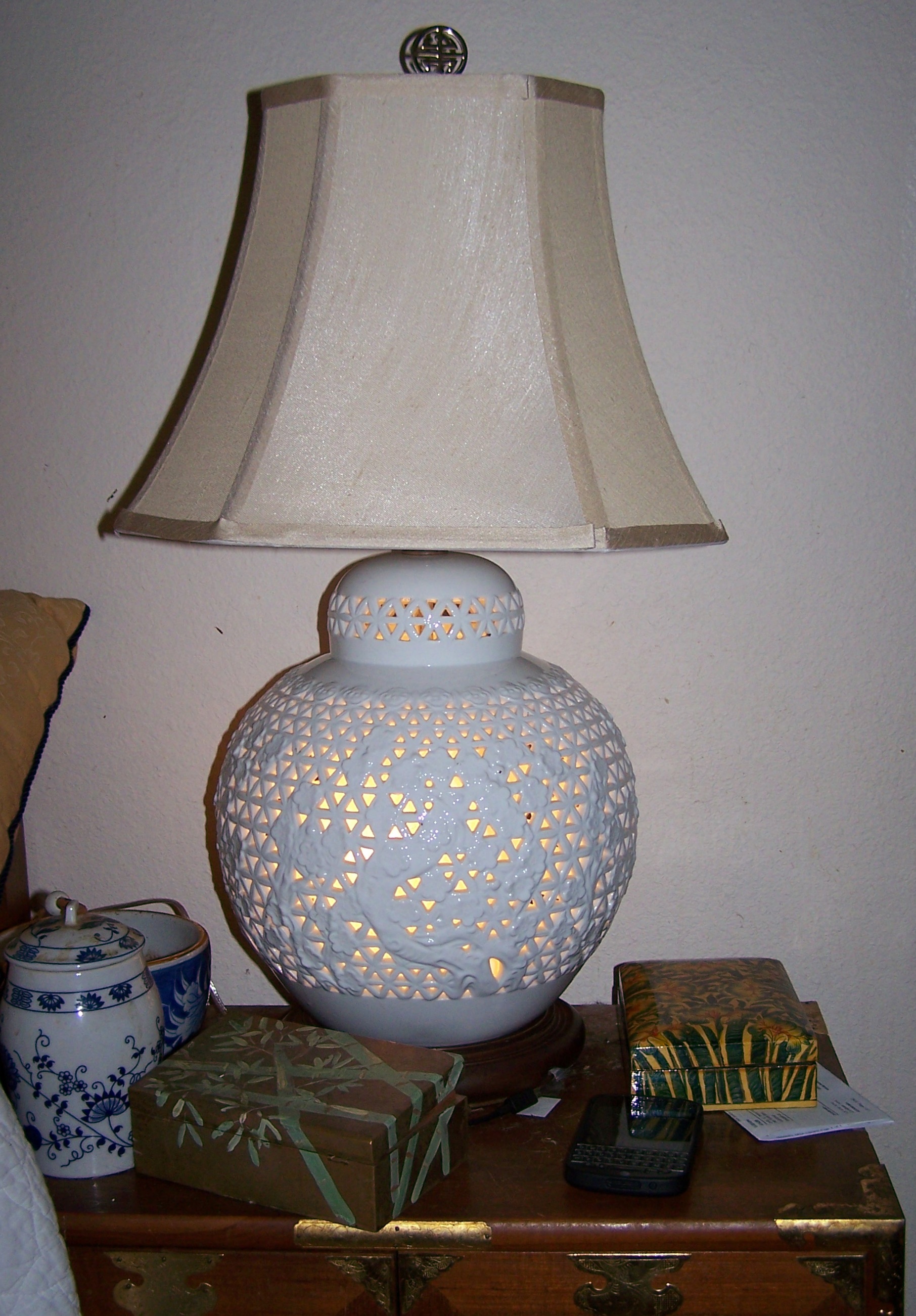
The lamp – rewired and with new shade and finial
We came back on Saturday, just to see if anything interesting was left; there was – enough to carry on the sale through the following day. This time my daughter suggested that we look at the tools and stuff in the garage, which we had not done on Friday. Most of the good power tools and camping gear had sold, but my daughter spotted a carved wooden door. Solid wood, un-finished and for an extremely reduced price … we had intended to replace the front door anyway. So, I bought it, while my daughter called our chivalrous next-door neighbor with a pick-up truck. It’s out in the shed right now, awaiting application of stain and varnish.
Good purchases all, and at excellent prices, but I am resolved after this that any purchases of anything other than books will be on a replacement-only bases. Something coming into the house will necessitate something going out of the house. Whatever the future holds for my estate and home, it should not involve multiple dumpsters.

My Tiny Patch of Suburban Paradise

My daughter has spotted a chicken coop at Sam’s Club, you see; quite a lavish one, as these things go. The last excursion into Sam’s we went to look at it again, and struck up a conversation with a woman who was also looking speculatively at the display coop. She turned out to be an artist, a neighbor of Victoria’s Black Swan Inn on Holbrook Road, and a friend of Howard the glass artist … so anyway, she talked up the Starving Artists Show in La Villita this weekend. She and my daughter swapped pictures of their creations on their cellphones, and we talked shows and budget shopping and scrounging, the best thrift shops around. It turns out that we are both fans of Thrifttown, and the conversation reminded me that I really ought to stop by there and get some new jeans. The one comfortable pair was pretty close to disintegrating, and well … we were going to hit Rainbow Gardens again, so why not check for any bargains to be had as long as we were going that way?

Purple Iris – hopefully the first of many
My daughter is always on the look-out for quality crystal and vintage glass, which sometimes show up in venues like Thrifttown, so we did a spin through that section – but on the way from there to the other side of the store, I spotted something oddly familiar, on a shelf with the usual assortment of battered pots and pans; green and pristine, with the glass and metal lid taped securely together. Was it … could it be? Why, yes it was – a classic Chantal enamel small stock-pot with the full-depth metal insert for cooking pasta! You can’t even get that kind or color of 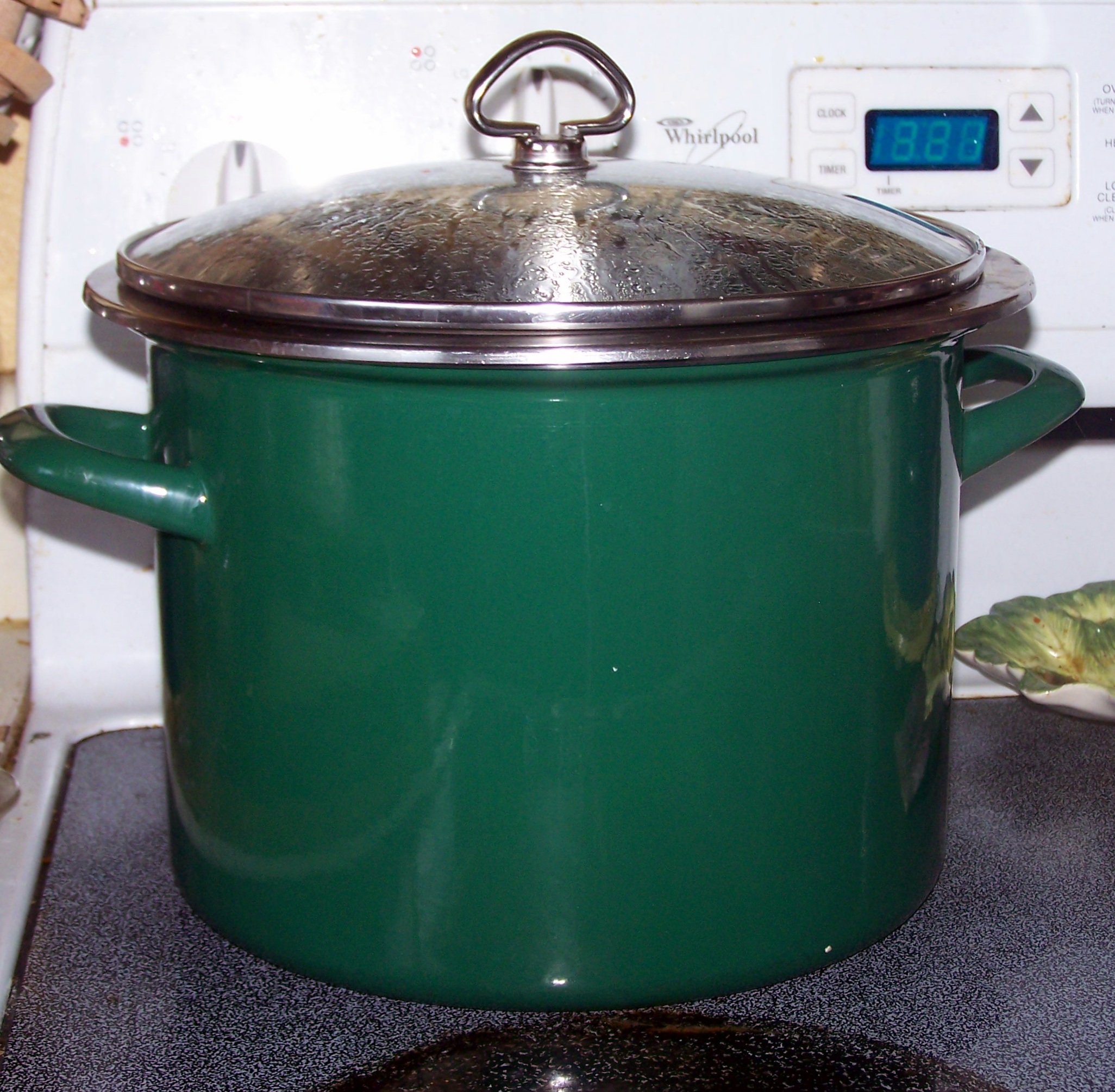 Chantal any more, save on Ebay for prices very close to what they would have been when new. I know this, because about fifteen years ago, I upgraded from the budget set of Revere-ware pots and pans that I had bought when I moved out of the barracks. I picked Chantal because they were nonreactive enamel, nicely styled, had a narrow metal rim around the edges of the pots and pans where the enamel would be most prone to chip, came in a pleasing number of sizes and colors, had glass lids (also edged with metal), and were of high quality but not so expensive that they were out of sight. So I upgraded and was totally happy with cobalt-blue pots and pans, which have served admirably, with hardly a chip or crack among them, although the metal rims of the most heavily-used pots are rather dinged. Alas, like picking my everyday household china from Reading China and Glass at the outlet mall in San Marcos, and thinking that they would be in business forever endeavor and I would be able to replace broken pieces and perhaps enlarge on what I had … Chantal stopped manufacturing that style, and all colors except for bright red and steel-finish. Well …(insert colorful oath here) I suppose I can always trust to luck on Ebay when I want to add another small saucepan or two, but here was a lovely pot to cook pasta in (or even to use as a canning kettle) for the not unreasonable price of $15.
Yes, of course I grabbed it. Even being green instead of cobalt blue, I’d have been kicking myself from here to Waco and back again, if I hadn’t.
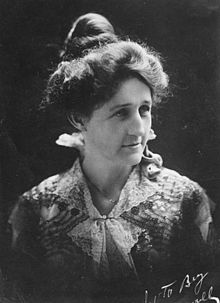
Miriam A. “Ma” Ferguson
Exactly a hundred years ago, an enterprising gentleman named James Edward Ferguson took office as the Governor of Texas. He was of a generation born long enough after the conclusion of the Civil War that hardships associated with that war had faded somewhat. The half-century long conflict with raiding Comanche and Kiowa war-bands was brought to a conclusion around the time of his birth, but he was still young enough to have racketed around the Wild West as it existed for the remainder of the century, variously employed in a mine, a factory making barbed wire, a wheat farm and a vineyard. Having gotten all that out of his system, he returned to Bell County, Texas, studied law, was admitted to the bar, and married the daughter of a neighbor, Miriam Amanda Wallace. Miriam Amanda was then almost 25, and had been to college. James Ferguson and his wife settled down to a life of quiet prosperity in Belton, Texas. There he founded a bank and dabbled in politics as a campaign manager, before running for and winning the office of governor in 1914 – as a Democrat, which was expected at the time and in that place – and as an anti-prohibitionist, which perhaps was not. Two years later, having not done anything in office which could be held against him, James Ferguson was re-elected … and almost immediately walked into a buzz-saw. A quarrel over appropriations for the University of Texas system and a political rival for the office of governor – ensconced among the facility as the newly-anointed head of a newly-established school of journalism – eventually blew up into such a huge ruckus that James Ferguson was impeached, with the result that he could not hold public office in Texas again – at least not under his own name.
With the hindsight of extreme cynicism regarding the press when dealing in personalities and matters political, one can wonder how much of the ruckus concerned his actual conduct in office, and how much was created by the state press. His erstwhile rival owned one, had connections with others, and had the backing of the intellectual elite of Texas as it was then. He was also generally anti-Prohibition, which lead to dark whispers that he was in the pockets of the brewing industry. Rather than continue being politically active as a ‘behind the scenes fixer’ James Edward Ferguson came up with a brilliant solution: put his wife out there as a gubernatorial candidate in 1924. Yes, Miriam Amanda Wallace Ferguson, likely rather brainy (being that she had married rather later than one might have expected of a woman of that time, and indulged in education well beyond high school) but in personality rather retiring, hit the campaign hustings with her loyal hubby ever at her side. Her campaign slogan was “Two Governors for the Price of One,” or alternately “Me for Ma, and I ain’t got a durn thing against Pa,” Her husband put on the folksy touch of calling her “Ma” and himself “Pa” – as he was ever a strong advocate of rural farmers and would have their undying support for most of the rest of their joint careers. Miriam Ferguson asked for the votes – and of women especially – as a reaffirmation and support of her husband.
And she was elected, likely to the horror and consternation of her husband’s political foes. She was the first elected female governor of Texas and the second elected female governor in the nation – although there is not much contention that “Pa” Ferguson was the real power behind the chair, as it were. She ran for office again in 1932 – winning a second term. Although she and “Pa” campaigned as folksy, down-to-earth populists, they were in no sense ‘rubes’; teetotalers both, they fiercely opposed Prohibition. “Ma” Ferguson was also generous with the pardoning authority of her office; over the course of two terms, she exercised it some 4,000 times – mostly, it should be noted – for violating various prohibition laws. Rumors did persist, then and rewards that many such pardons were in exchange for cash paid to the governor’s husband. One rather amusing but apocryphal tale had it that a man began walking through a door at the same time as Mrs. Ferguson: “Oh, pardon me,” he said, as the manners of the time required, and Mrs. Ferguson answered, “Sure, come on in – it’ll only take a minute or two to do the paper-work.” She has also (along with a great many other personalities held by their so-called betters to be ignorant and backward) credited with the remark to the effect that if English was good enough for Jesus Christ it ought to be good enough for the children of Texas.
And the Ferguson team also came out against the Klu Klux Klan, then very much a powerful force in the rural South and Midwest. In Texas, the Klan’s activities were not so much racism, as it was nativist and wedded to a certain kind of moral authoritarianism, prone to punishing people suspected of adultery, gambling, sexual transgressions, bootlegging and speaking German in public. This tended to excite disapproval among thoughtful citizens who professed to uphold the rule of law. While the Klan could and did control certain elections, especially at the local level – there were organizations just as vehemently opposed to their activities; various influential urban newspapers such as the Houston Chronicle, the Chambers of Commerce, the Masons, the State Bar Association, and a number of citizen’s organizations. As part of her first campaign, Ma Ferguson promised an anti-mask law, targeting the Klan, making it illegal for any so-called secret society to allow members to appear masked or disguised in public. KKK membership in Texas dropped precipitously and continued to drop; whether Team Ferguson’s activities had anything to do with it, or they were shrewd and farsighted enough to see the trend and get aboard is a matter of contention for specialist historians. Still – for a couple who were and probably are still dismissed as a pair of rubes, they chose to oppose one of the stupidest but most well-meant popular social efforts of the early 20th century, and one of stupidest and most brutal organizations as well.
 (So, this is a snippet of one of the works in progress – Sunset and Steel Rails, set in 1885 through the end of the century, where a young woman sets out on a journey west. Previous chapters here, here, and here.)
Chapter 6 – The Escape
“That is … providential,” Sophia whispered, barely a breath as she leaned her head against the back of the tall bedroom chair. The exertion of dressing – then hurriedly undressing to put on a pretense of helpless invalidism in front of Richard – and the stress of maintaining that pretense had exhausted her almost completely. Likely she was not as well-recovered as she thought. When she was done with the breakfast tray, she would walk around the room for a bit – slipper-clad so as not to make any noise – and then lie down for a rest. “I must remember to thank your brother … and make some small reward to him. Any reward within my power to give him is likely to be too little.”
“Ohh, think nothing of it,” Agnes assured her. She regarded Sophia with anxious eyes. “You can eat a bit, Miss Sophia? I know… the bread is a bit burnt, but I scraped off the worst bits. And the eggs are done, right enough. Ye need your strength, ye do. Declan – he has a crochet about being locked in. He does no’ like it for any, after the fire when Dadda was away with the Army an’ Mam was working in the laundry at night … she had locked Declan an’ Siobhan into their room – Siobhan was only a baby, y’see, an’ Declan seven or eight. She wanted to keep them safe, y’see. Ohh, it were dreatful, to hear them tell it now! Declan, he can no’ bear a closed room – he must keep a window open, all but the coldest nights, or he can no’ sleep at a’.” She peered earnestly at Sophia; so worried about the plate prepared for her. Sophia felt obliged to take a bite, and then another, so as to reassure Agnes. It wouldn’t have passed muster at Delmonicos’ – or in the meanest boarding-house in the harbor district by any means – but Sophia found her own lingering sense of hunger, and so it tasted good enough.
“He must get out, y’see,” Agnes continued, speaking softly as she moved around the room, while Sophia ate her breakfast, deftly re-making the bed with clean sheets, and gathering up those few crumpled garments that might benefit from a trip to the laundry. “So – he said. He told me, I would have anither key, to keep w’ me always. He’ll give it to me before he is finished, so he will. An’ as soon as ye can,” Agnes fixed Sophia with a particularly earnest look. “An’ ye can – soon? When Mr. Richard goes out for a long while, an’ ye can walk to Miss Minerva’s house … oh, an’ if the house catches fire… I will so have ye’ out o’ this room …”
“Good,” Sophia took a last mouthful of scrambled egg – a little rubbery and weeping into the slices of toast, but she was indeed hungry, and it took the tasted of molasses thinned with water and vinegar out of her mouth. She did have an appetite, which is how she was certain she was on the mend, physically. “I can’t let my brother send me to Danvers, Agnes … I imagine that the only thing stopping him is that he must think I am still very ill and drugged with Dr. Cotton’s vile potion, although I suppose I could be carried away on a litter. The very first time that he leaves the house for a good length of time … that will be the best chance that I have.”
“Aye,” Agnes bobbed her head in perfect agreement. “An’ I will set aside some of your clothes an’ things – an’ hide them with the dirty things to go to the laundry, so that you will have a bit o’ luggage. I’ll bring it to Miss Vining’s, so that you need not exhaust yourself carrying it, or attract notice.”
“When does my brother next have an engagement away from the house?” Sophia considered the walk to Beacon Hill – not a long way, but through streets that might be busy during the day and dangerous for a woman alone at night.
“Tonight, I think,” Agnes replied. “Although he has not said so to me straight-out. He is thinking of meeting with a friend for supper, so he told me. He has gone out every evening to a chop-house for a meal, but he does no’ stay very long. Perhaps with a lock on your door, he may think he has time for a meal at leisure…”
“Tonight, then,” Sophia agreed. Fury and desperation might have to carry her when will and strength failed. She heard a distant heavy weight on the staircase below. “There he is, come to let you out, Agnes, let me have the pillowcase.” She set the tray aside, and going to her dressing table, tumbled some hastily-selected contents into it. “My little bits of jewelry … my good gloves. The rest are some shifts and petticoats and things. The lace-trimmed shirtwaist Emma gave me for my birthday. I might not think her so dear a friend now – but she does have the most refined taste. There … come and let me out directly that Richard has gone. I shall be ready.”
“Yes, Miss Sophia!” Agnes whispered. “Into the bed w’you, so he will think you are still weak!”
Sophia flung off her wrapper, and rolled herself between the fresh and crisp sheets even as Richard fumbled at the door. She closed her eyes, as if laying in a stupor, listening to Richard chiding Agnes for so neglecting the housekeeping. How hateful – when it was only poor Agnes working all alone, to bring in the coal and wood, and take away the ashes and the chamber-pots, and now to see to the sparse meals as well! Were she Agnes, she would hate Richard with a sullen and abiding hate. She supposed it was only Agnes’ sense of duty and personal fondness for herself which kept the downtrodden little maid-of-all-work in the house. Should Sophia effect her escape tonight, with Agnes’ help, she would encourage the girl to find work elsewhere … yes, certainly – and write up a recommendation for her.
The door to her room closed with a thump, and then a brief metallic rattle, as Richard padlocked it closed. Sophia listened to the voices and footsteps of her brother and Agnes fade, and considered what she must do next: choose and pack those few things which she couldn’t bear to leave behind … and rest. She was more exhausted from her efforts in this morning than she liked to admit, even to herself. She meant only to close her eyes and rest for a few hours, but when next she opened them, the pale golden sunshine of afternoon had painted the pattern of the window-frame on the worn Turkey rug at her bedside. A whisper at the door had roused her – Agnes’ voice.
“Miss Sophia? Are ye awake? I have the key in me hand. Mr. Richard … he will be away at about half-past five. Are ye awake – d’ye hear me, Miss Sophia?”
Sophia threw off the bedclothes laying over her, and scrambled to the door, her heart hammering with apprehension, lest they be overheard. “Yes, Agnes – I am awake. How long is it until then?”
“The clock has just struck the hour of four, Miss Sophia,” Agnes sounded immeasurably reassured. “Be ye dressed and ready … I will come and unlock the door as soon as I have seen Mr. Richard around the corner of Berkeley Street.”
“I will be so, Agnes …” Sophia whispered, almost limp with gratitude and relief. “…and bless you.”
“Och,” Agnes sounded almost embarrassed. “’Tis nothing. Ye’ve been good t’ me, an’ Declan, too … an’ Father Anselm says that one should never stand by an’ see injustice be done.”
“I am grateful – to you and to your Father Ans…” Sophia began, but Agnes cut her off.
“No mind to that, Miss – ‘e’s calling for me, awa’ downstairs. Be ready!”
Heedful of the danger that Richard might still choose to climb the two flights of stairs to assure himself once again of her helpless condition, Sophia put off dressing herself in her best street costume, and instead sorted out what she might take with her, either in her reticule, or in whatever bag that Agnes might bring for the rest of her possessions. She sat on the edge of the bed in her wrapper, regarding the room that she had as her own, the room she had slept in since a child – every object and furnishing dear and familiar; no, she could not take any of the larger things, and in any case they belonged to Richard. She gathered up her ivory and silver hairbrush, the dressing set that it was a part of, several of her favorite books – to include a battered edition of Vanity Fair and a collection of Tennyson poems. No, no more – too many books would make the bag too heavy for Agnes, or for herself. She added a single silver-framed daguerreotype of her parents at the time of their wedding, the best and newest of her dresses … that would have to do. Underneath the wrapper, she had on her cleanest shift, drawers, stockings and petticoat, her corset as tightly-laced as she could draw the strings. The minutes crawled past, as slowly as a crippled beggar working his way down the street with his crutch and tin cup, measured out every fifteen minutes by the chimes of the tall-case clock two floors below. With the windows open to the mild late-spring afternoon, Sophia could hear them clearly.
She used those minutes to think on what she must do, once she achieved the sanctuary of Great-Aunt Minnie’s house. There she would be safe from any effort of Richard’s to pry her out; Great-Aunt Minnie would see to that, with her many friends – some of them in high places indeed. The old lady had campaigned fearlessly for abolition, and for the rights of women – and if there was a cause she would champion to her last breath, the freedom and well-being of her dear brother’s grandchild would be chief among them. Until Minnie brought her legal weaponry to bear, Sophia might yet be as much a prisoner in the old Vining mansion as she was in her brother’s.
“I won’t mind in the least,” Sophia said aloud, more to hear a voice in the room. She had always been fond of Great-Aunt Minnie’s tall old-fashioned house, with the narrow garden and the stables – presently disused for anything save dusty piles of crates and trunks, for the Vinings had never thrown or given away anything. When she was a child, she had loved exploring the old house and listening to Great-Aunt Minnie’s stories of the family. Her own mother had been born in the sunniest and best-fitted of the upstairs rooms – the same that her Grandfather Horace had died in, for he was a consumptive and came back to his childhood home at the last. “There is so much that I would ask of her,” Sophia said again, aloud. “Of my father. He was very brave, so Mama always said. And of Grandfather – he traveled, so Mama told me. Traveled far, because of his bad health; Mama barely knew him at all, when she was a child or near to grown. Aunt Minnie would know of his adventures – he was her brother, after all …”
Agreeably lost in these considerations – which passed the time, no doubt about it – Sophia was brought abruptly out of them by a quiet knock on her door, and the sound of someone fumbling with the padlock upon it.
“Miss Sophia?” Agnes called. “Are ye awake? Mr. Richard has gone from the house, and is away down the street – he will be away to his supper. Are ye ready no’?”
“I am,” Sophia replied. She stood up as Agnes came through the door, with a limp and empty carpet bag in hand. “Let me put on my dress, my hat and mantel – oh, take this, Agnes! Three minutes, and I will be!”
Recent Comments